Is the Bay Area getting hotter?
Extreme Heat Projections
Climate change is bringing more days (and nights) with extremely high temperatures. Extreme heat is one of the most deadly climate hazards — it consistently leads to the deadliest outcomes of all weather events annually (National Weather Service & NOAA, 2022). Anyone can be affected by extreme heat, but this hazard often disproportionately impacts low-income communities.
Future public health consequences of extreme heat are likely to increase, but adaptation and mitigation steps can improve outcomes. In order to understand how cities can take steps to protect communities, finer resolution temperature maps are required to understand:
- Which neighborhoods tend to get hotter than others
- What the distribution of cooling centers are
- What steps can be taken to ensure all communities have access to resources during extreme heat events
With precise data, we hope to create precise solutions.
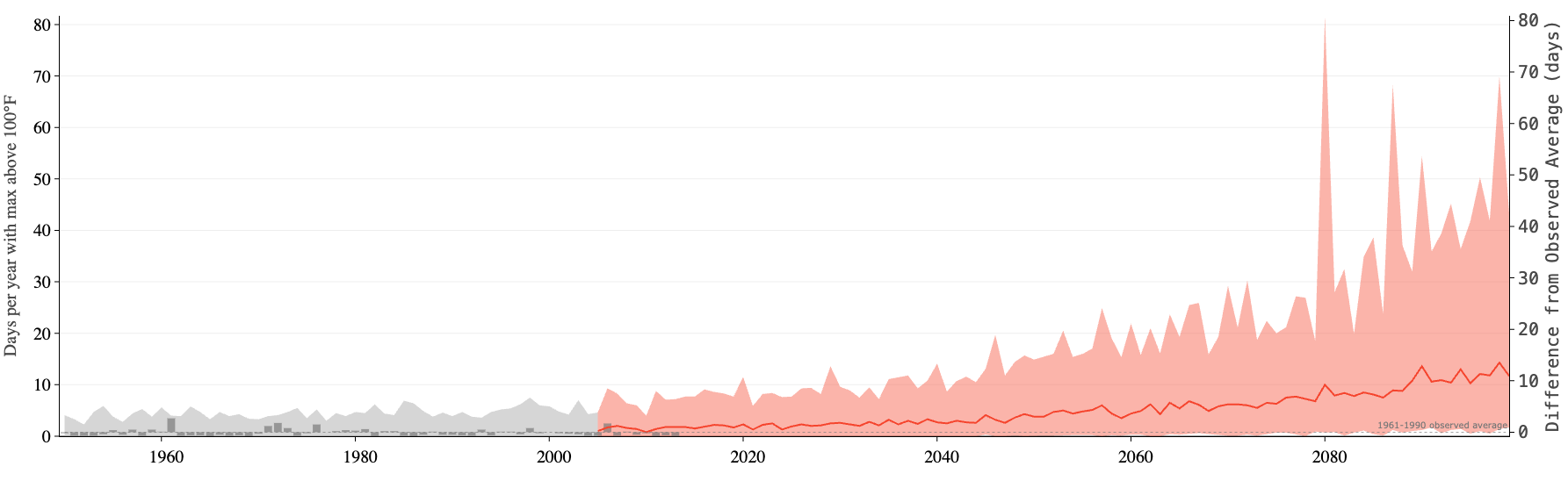
The graph below shows the projected increase in the number of days per year that will be 100°F in Santa Clara County. Source: The Climate Explorer.
Urban Heat Island Effect
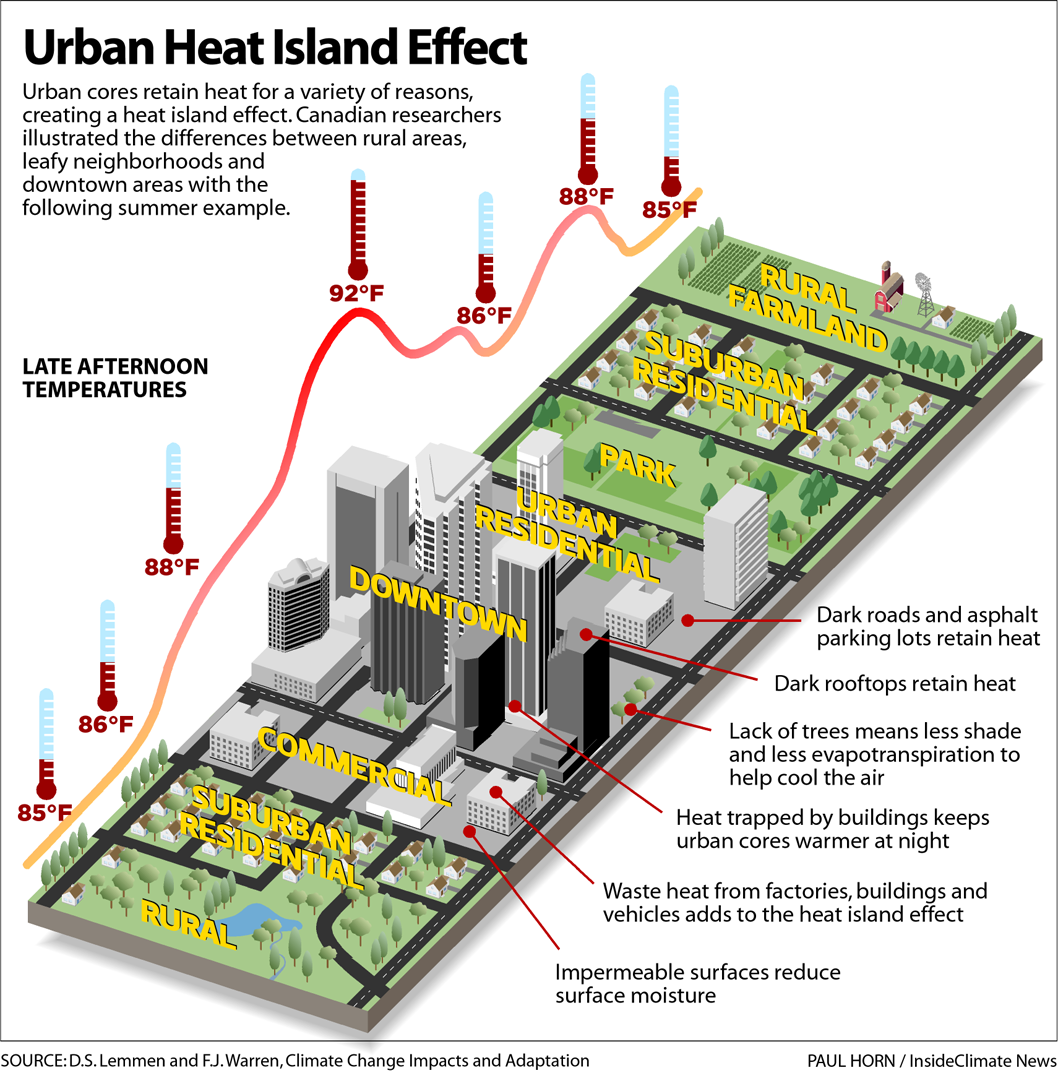
Extreme heat intensifies in developed areas with many buildings and roads, but few trees or green spaces. In these areas, heat gets stored by unshaded concrete and asphalt, which then radiate heat back into the air and cause temperatures to be 15°F to 20°F warmer in "urban heat islands."
When it's already hot, 20 degrees of extra heat is a big deal, especially if you're spending time outside for work or play. Extreme heat can trigger dangerous health problems like exhaustion, heart attacks, breathing problems, and heat stroke. It can also make chronic health conditions worse or trigger a health crisis.
We can't predict the weather, but we can be prepared to respond — starting by understanding how heat affects us.
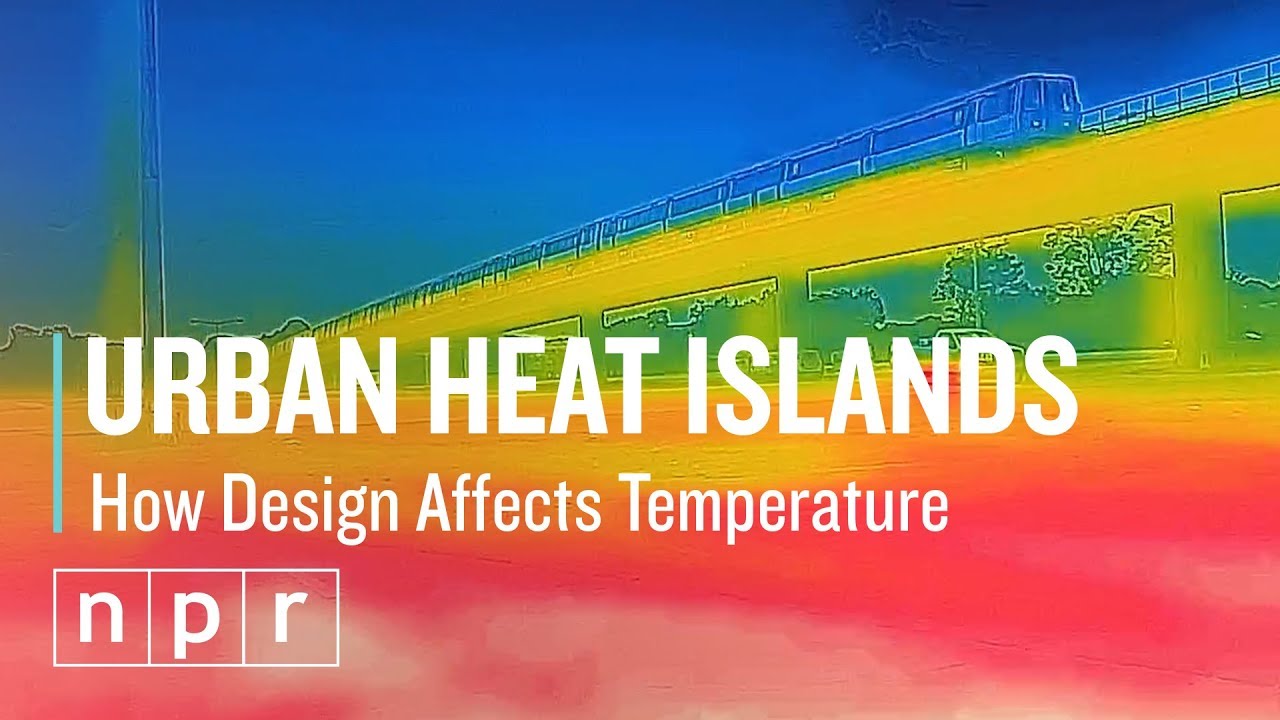
Want to learn more? Here's a video about Urban Heat Island by NPR.